
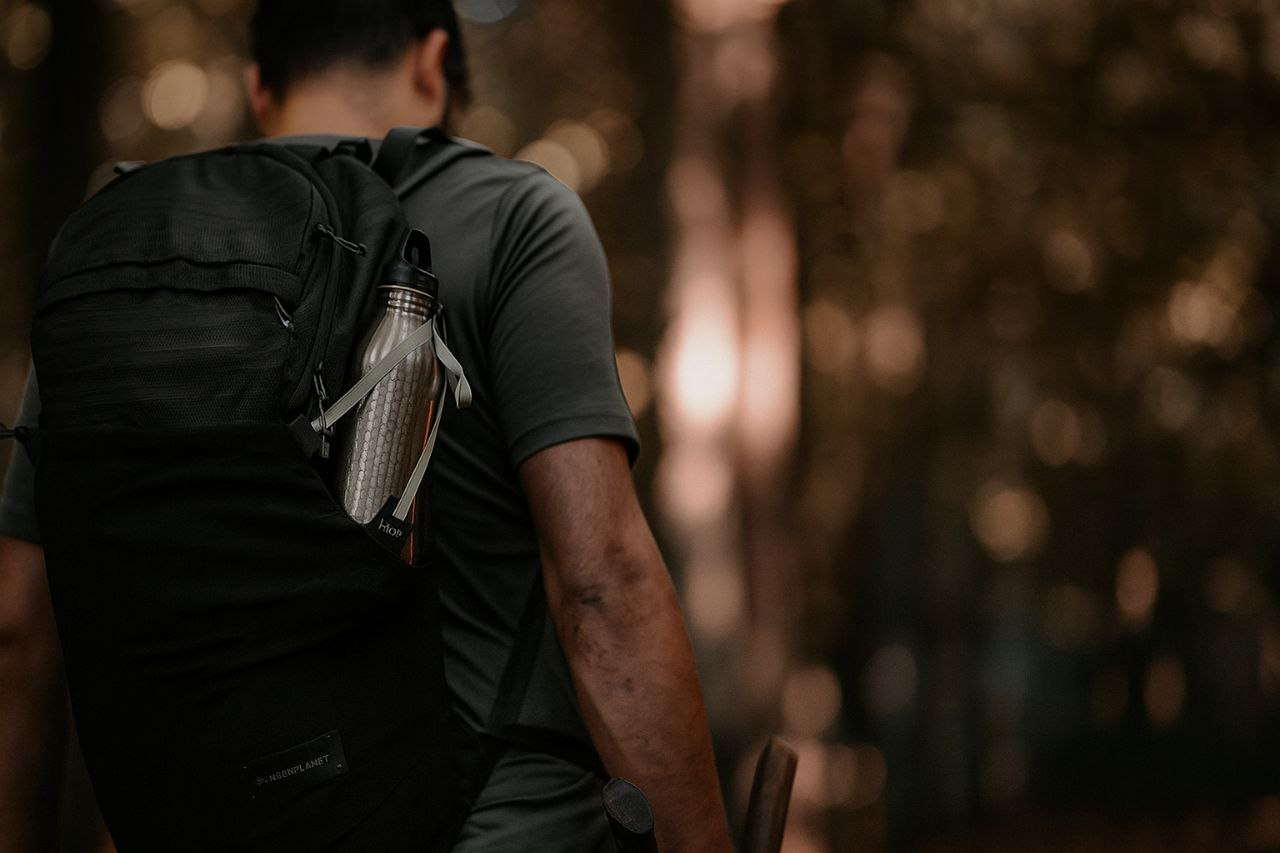
Picture this: you’re five hours into a stunning ridge-line hike, the sun is high, and your water supply is running low. You finally hear the amazing sound of a running stream. You scramble down, ready to fill up, but then you pause. The water looks clean, but… is it? Is this the stream that’s going to leave you doubled over with “beaver fever” (hello, Giardia) and ruin the rest of your trip? Every backpacker knows this moment of doubt. For years, our solutions—before new tech like the self cleaning water bottle came along—have been a clunky trade-off: carry heavy filters that clog, use chemical tablets that taste like a swimming pool, or burn precious fuel to boil water and wait for it to cool.

It’s not just about safety, either. It’s about the sheer hassle. And what about the water you do carry? On a hot day, it’s lukewarm and unrefreshing in an hour. On a cold-weather trek, it’s painfully icy or, worse, starts to freeze. Then there’s the dreaded “bottle funk”—that funky, mildewy smell your bottle gets after a few days on the trail, no matter how well you thought you rinsed it. What if one piece of gear could solve all of this? What if your bottle could not only purify any water source in seconds but also keep your drink at the perfect temperature and clean itself? This is the entire concept behind the self cleaning water bottle, and it’s the new standard for smart hydration.
The Risky Sip: Why Your Trail Water Source Is a Gamble
For backpackers, water is life. But it’s also our single greatest potential liability. Those crystal-clear mountain streams and serene alpine lakes are not as pure as they look. They’re part of a living ecosystem, which means they are full of… well, life.
Unfortunately, this includes microorganisms that can wreak havoc on your digestive system. According to the CDC, waterborne pathogens are a real risk, even in the backcountry. The main culprits are:
- Protozoa (like Giardia and Cryptosporidium): These are the most common cause of “backpacker’s diarrhea.” They’re tough, can survive in cold water, and are the reason you’re warned not to drink downstream from campsites or grazing animals.
- Bacteria (like E. coli and Salmonella): Often washed into water sources from human or animal waste, these can cause severe gastrointestinal distress.
- Viruses (like Hepatitis A and Norovirus): These are a significant threat, especially in areas with heavy human traffic. Here’s the scary part: most common backpacking filters are not small enough to catch viruses.
Getting sick on the trail isn’t just an inconvenience; it can be dangerous, leading to dehydration and disorientation. This is why a reliable purification method isn’t optional—it’s essential.
The Problem with Traditional Water Purification
For decades, we’ve relied on a few “tried-and-true” methods, but let’s be honest, they all have serious drawbacks for someone on the move.

The Squeeze, Wait, or Boil Game
We’ve all been there, balancing our gear and wrestling with our water system.
- Pump/Squeeze Filters: These are great at removing bacteria and protozoa. But they can be painfully slow, especially when you’re tired and just want to drink. They require regular backflushing and maintenance, and if the filter element freezes on a cold night, it can crack (often invisibly), rendering it useless. Plus, as mentioned, most don’t stop viruses.
- Chemical Tablets (Iodine/Chlorine): These are lightweight and kill viruses, which is a big plus. The downsides? They taste terrible, turning fresh mountain water into something that tastes faintly like a public pool. They also have a long wait time—often 30 minutes to 4 hours—which is agonizing when you’re thirsty now.
- Boiling: This is the gold standard. It kills everything. But it also requires you to stop, set up your stove, burn valuable fuel (which you have to carry), and then wait for the water to cool down. It’s the least practical option for on-the-go hydration.
And Then… The Dreaded “Bottle Funk” a Self-Cleaning Bottle Solves
Even if you purify your water before it goes in, your bottle itself can become a problem. After days of use, with only a quick rinse at a campsite, bacteria and biofilm start to build up. This is what causes that unpleasant mildewy or “swampy” smell.
You try to scrub it, but getting into the nooks and crannies of a narrow bottle is tough. This lingering odor can make even the purest water taste “off,” discouraging you from drinking and leading to dehydration.
A Smarter Solution: How a Self Cleaning Water Bottle Works
This is where technology changes the game. The new generation of smart water bottles solves both problems—dirty water and a dirty bottle—with one elegant solution: UV-C light.
You might have heard of UV purification for hospitals or homes, but now it’s portable. Inside these bottles, a special LED in the cap emits UV-C light, a specific wavelength of light that is a natural, powerful germicide.
Here’s how it works in simple, non-science-nerd terms:
- You fill your bottle from any stream, tap, or fountain.
- You press a button on the cap.
- The UV-C light activates, flooding the water.
- In as little as 60 seconds, the light neutralizes the microbes. As the U.S. EPA explains, the UV radiation scrambles the microorganism’s DNA and RNA, destroying its ability to reproduce and make you sick.
This technology is incredibly effective, eliminating up to 99.9% of bacteria and viruses. It’s the same power as boiling, but it’s instant, chemical-free, and doesn’t affect the taste of the water.
But the “self-cleaning” part is the real genius. Most bottles with this tech have an automatic mode. Every hour or two, the UV-C light will flash on for a few seconds, purifying the bottle itself. This continuous cleaning prevents any bacteria, mold, or odors from ever getting a foothold. A good self cleaning water bottle literally does the maintenance for you, so your bottle stays as fresh and odor-free on day 10 of your trek as it was on day 1.
Beyond Purification: Why a Smart Bottle Needs Insulation
Okay, so the water is safe and the bottle is clean. But what about the other big backpacker problem: temperature?
There’s nothing more demoralizing than taking a swig of hot, sun-baked water in the middle of a shadeless climb. On the flip side, trying to drink near-freezing water on a cold morning can be a painful jolt, and in winter, preventing your water from turning to ice is a constant battle.
This is why a simple, single-wall plastic bottle just doesn’t cut it. The solution is double-wall vacuum insulation. It’s the same tech used in high-end thermoses, and it’s a game-changer for backpacking.
By creating an airless void between two layers of stainless steel, it stops heat transfer in its tracks. This means:
- Cold Stays Cold: You can fill your bottle with icy stream water, and it will still be refreshingly cold 24 hours later,. even in a hot pack.
- Hot Stays Hot: Want to make tea or coffee in the morning and sip it on the trail? A good insulated bottle will keep it steaming hot for up to 12 hours.
What to Look For in a Self-Cleaning Purifying Bottle
When you combine these technologies, you get the ultimate piece of backpacking gear. A single self cleaning water bottle replaces your filter, your tablets, and your insulated bottle with one item.
If you’re looking for a bottle that does it all, you’ll want a checklist of features.
- Effective Purification: Look for proven UV-C technology that handles bacteria and viruses in 60-90 seconds. Bottles like the Aqua Sof Bottle, for example, use this to give you safe water on demand.
- True Insulation: Don’t settle for less than double-wall stainless steel. The ability to keep water cold for 24 hours or hot for 12 is the standard.
- Durability and Build: Backpacking gear takes a beating. It needs to be crafted from durable, BPA-free materials (like 18/8 stainless steel) that can handle being dropped or strapped to the outside of a pack. It also must be leak-proof.
- Long-Lasting Battery: This is critical. You need a battery that lasts for your whole trip, not just a day. A good rechargeable battery should last for weeks on a single charge, purifying water dozens of times.
- Ease of Use: When you’re exhausted, you don’t want to mess with a complicated system. A simple, one-button operation is all you need.
Imagine the freedom: you arrive at a water source, fill up, press a button, and by the time you’ve re-tied your boot, your water is 100% safe to drink. That’s the entire process.
Lighten Your Pack, Help the Planet
The benefits go beyond just convenience.
First, it lightens your load. For any backpacker, especially those counting grams, consolidating gear is a huge win. You’re removing the weight of a separate filter, a backup chemical treatment, and maybe even a separate insulated mug.
Second, it’s a massive win for the environment. As backpackers, we’re all about the “Leave No Trace” ethic. Yet, many of us buy plastic water bottles when we resupply in a trail town because we don’t trust the hostel tap or just want a “clean” start.
A self-cleaning, purifying bottle eliminates this waste entirely. You can fill up from any tap, any fountain, or any stream with total confidence. You’ll never need to buy a single-use plastic water bottle again. It’s a tool that not only makes your life easier but also helps you protect the very wilderness you’re out there to enjoy.
Your New Favorite Piece of Gear
Backpacking is about freedom, adventure, and self-reliance. Your gear shouldn’t be a source of worry or hassle; it should support that freedom. The daily chores of managing water—the filtering, the waiting, the bad taste, the funky bottle—are some of the biggest annoyances on the trail.
Modern technology has finally provided a real, all-in-one solution: the self cleaning water bottle. This new type of gear tackles every single one of these problems, especially when it includes insulation and purification. It gives you complete confidence in your water safety, keeps your drink at the perfect temperature, and stays fresh and odor-free for your entire trek. It’s a small change in your pack that makes a massive difference in your daily trail life.
So, as you plan your next trip and review your gear list, take a hard look at your water system. Is it weighing you down, slowing you down, or leaving a bad taste in your mouth? It might be time for an upgrade.